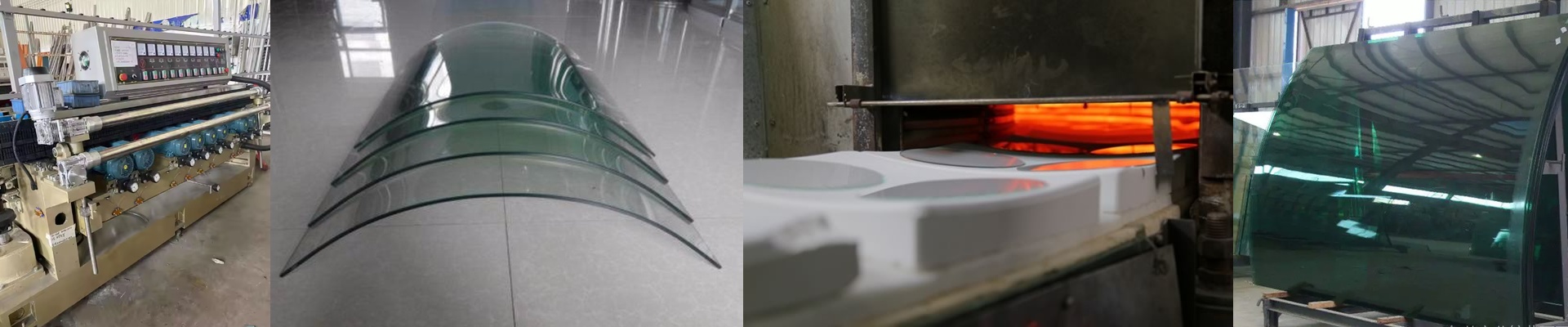
On the line, heat isn’t just a number on a chart—it’s control. In tempering, bending, EVA/SGP/PVB lamination, coating drying, and insulating glass sealing, uneven heating shows up as optical distortion, edge stress fractures, and whole loads getting scrapped. You need a heat source that gets to setpoint fast, holds uniformity across the sheet, and repeats that performance shift after shift. What matters under the hood Gold-coated infrared lamps put out short-wave energy with high emissivity and a quick response. The gold reflective layer keeps the heat directed down, so you lose less to the surroundings and pack more energy density right at the work surface. Paired with a quartz envelope, the element handles rapid thermal cycling and holds stable output in continuous production. The specs are chosen for plant reality: high-wattage density for fast ramp-up, standardized voltage and terminals for direct integration, and a compact geometry that fits tight oven zones and retrofits existing heating modules. In glass processing, cycle time is money and temperature uniformity is yield. These lamps hit the target quickly, cutting dwell time and letting you push throughput without having to raise line speed. The focused IR profile reduces convection-driven hot spots and cold edges, which keeps thermal stress inside the acceptable window—fewer rejects from bow, warp, or edge cracking. You also see energy use come down because less heat is wasted upward or sideways, and the lamps run long enough to meet the reliability expectations of industrial heating bays. Installation is straightforward, but the lamp has to match the reflector geometry and the machine’s control strategy. Zone power density and dwell profiles still need tuning to glass thickness, coating type, and the adhesive system you’re running. You’ll only see a real performance gain when the IR pattern, airflow, and thermocouple placement are aligned with the process.