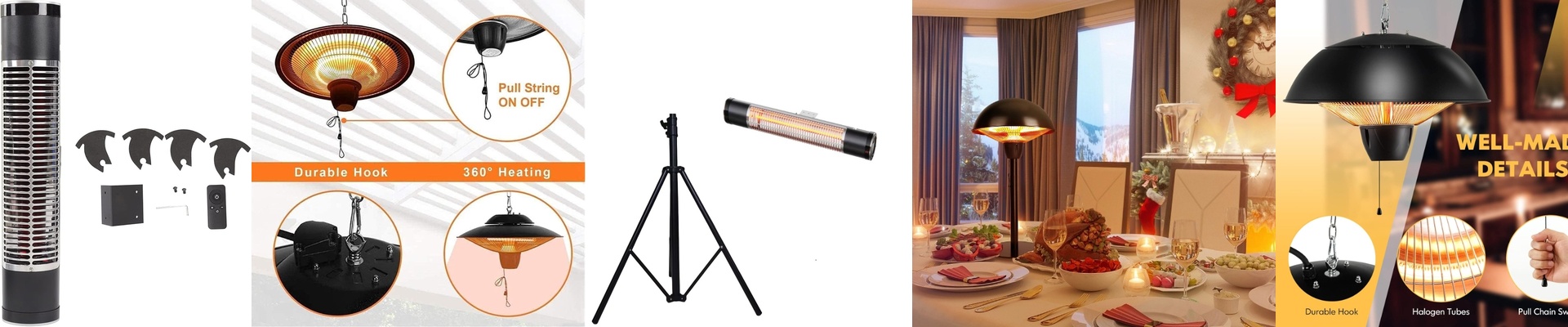
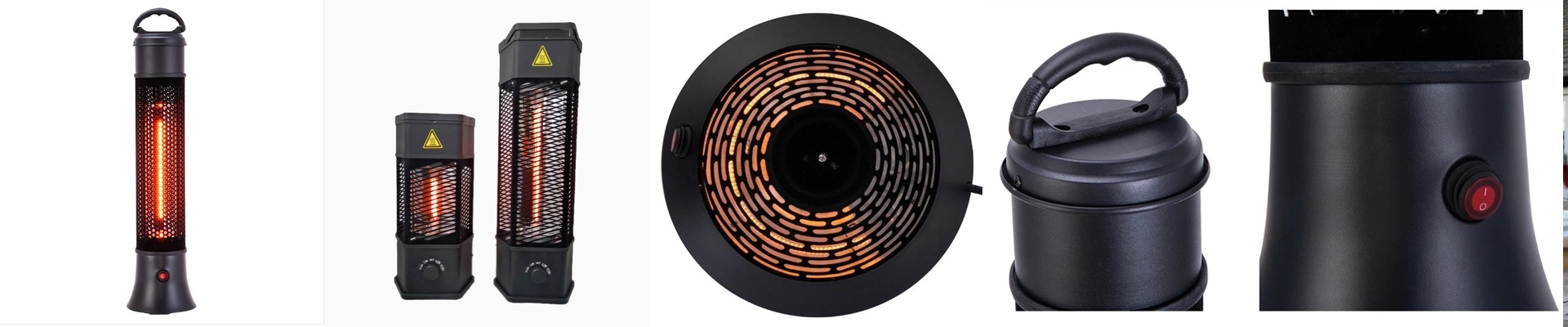
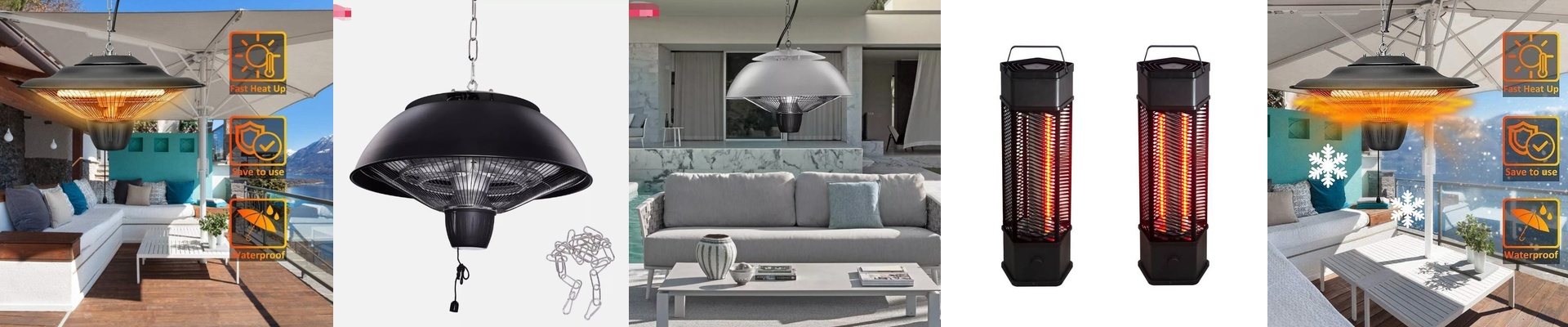
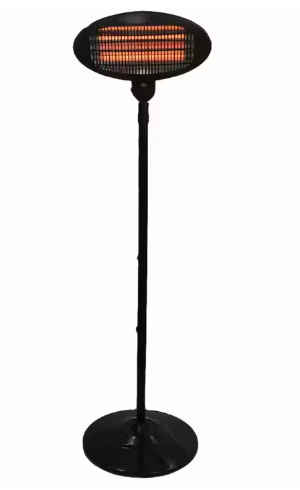
The minute the sun goes down, the yard flips from cozy to unusable. Air-blowing heaters make you wait while heat rises and disappears. You end up standing there, shivering. An infrared patio heater cuts through that—quickly. It sends radiant warmth straight to people, furniture, and the deck surface, so you feel heat where you need it, not just up in the air.
What matters under the hood
We build these around a carbon fiber heating element. It heats fast and holds an even temperature across the coil, so the unit throws focused infrared warmth. You get comfort within seconds of flipping the switch. Pick 1500W or 2000W to match your space, and you’re set with standard 120V plug-in wiring—no complicated install. The built-in thermostat keeps the output steady once you set your comfort level. Tip-over protection shuts the heater off if it gets knocked over. For outdoor use, an IP rating keeps the internals protected from splashes and weather.
Why this works where you actually use it
On the patio, deck, or in a three-season room, infrared warmth is the difference between an early night and staying out. Air-blowing heaters push hot air that rises and scatters; infrared keeps the heat low and targeted. You can talk, eat, and relax without feeling blasted by a jet of hot air. You also save energy in practice, because the heater warms people and surfaces directly instead of trying to heat a big volume of air that escapes every time a door opens. The payoff is a more consistent, comfortable outdoor living feel.
The details that keep it working
Infrared patio heaters do their best when mounted about 6–8 feet above the seating area for even coverage. Clearance matters—keep the unit away from combustible materials and route the power cord safely. In very damp, wind-driven conditions, a sheltered mounting spot helps maintain performance. If you want year-round use, plan on a heater with the right IP rating and a stable mounting setup.