
What’s Actually Under the Hood
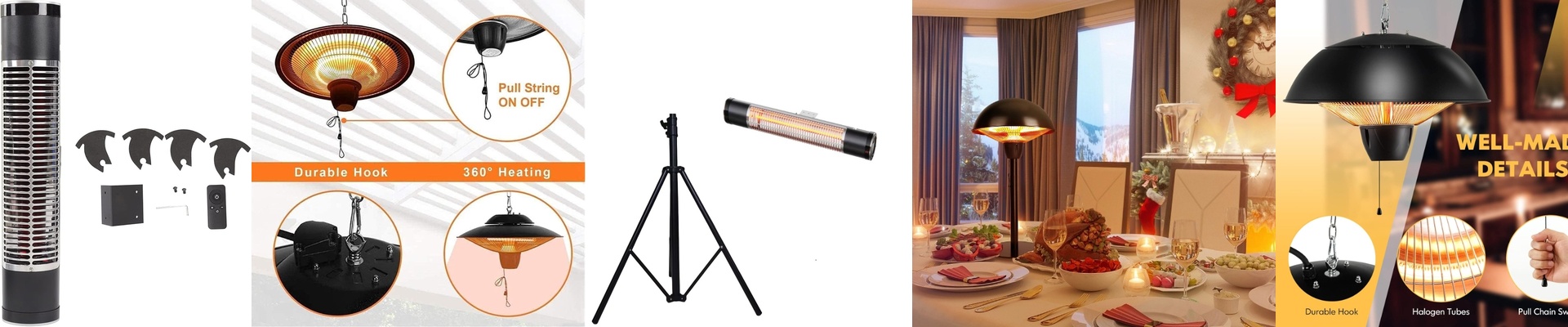
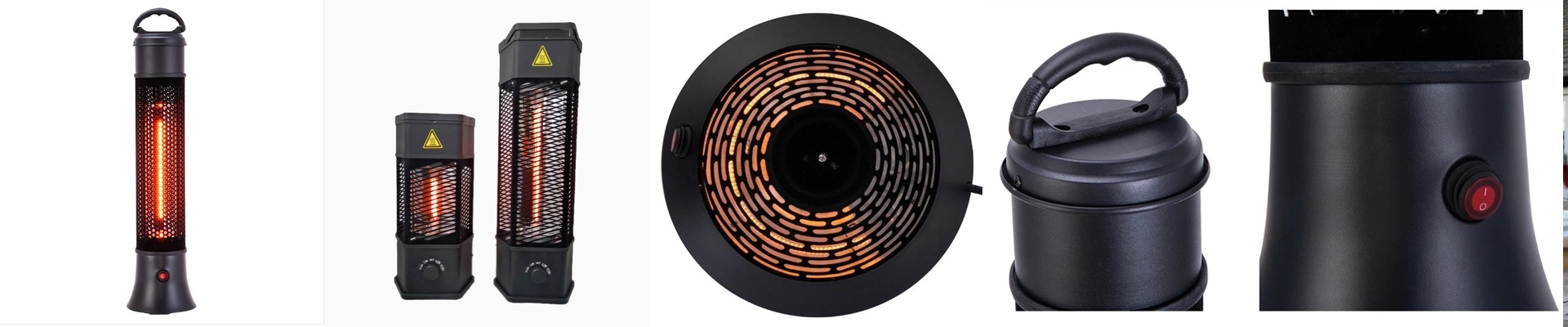
Here’s how we built this workshop ceiling infrared heater. It’s all about a modular approach, starting with the power setup. We run it on a 400V supply. That gives you a lot of heat without pulling a ton of current. The payoff? You can use thinner wiring and not worry about voltage dipping over long ceiling runs. The heating element is a compact 300mm tube, but it packs 2500W. That high watt density is by design. It throws out intense, directional infrared heat that hits the floor and work surfaces straight on—instead of just warming the air. What does that feel like on the floor? Warm-up is fast. Temperatures stay steady. And you’re not wasting energy heating the air up top while the space below stays cold.
The Materials That Make It Tough
Inside, you’ve got a quartz envelope filled with halogen. It keeps thermal performance stable and responds quickly. Quartz handles thermal shock well, so the heater can cycle on and off without cracking. On the outside, a special coating keeps emissivity consistent and helps fend off workshop grime. The connector is an R7s interface. It stays secure at high temps, and it makes replacement simple. When a tube goes, you don’t rewire the whole fixture. You just release the connector, swap the module, and seat the new one. It’s the same no-nonsense approach we use on production lines, where downtime is measured in minutes.
How It Handles Real Workshop Life
Workshops are tough—vibration, dust, and long hours. Our modular design turns a 5-year maintenance cycle into a quick swap, not a full refit. You spec the fixture once. Then, when a tube finally burns out, you replace just the hot module. The footprint doesn’t change. The mounting doesn’t change. The electrical interface stays the same. Now, there’s one thing to plan for. A 2500W, 400V setup delivers serious heat density, so your ventilation and cooling need to be sized for that extra thermal load. Get that right, and you get dependable spot heating with service time that fits your schedule.