Getting the Heat Right in Glass R&D
If you’ve ever tried using a standard, off-the-shelf infrared lamp for glass research, you know the frustration. They’re designed to be uniform. But in the world of glass science, “uniform” is usually the last thing you actually want. You need gradients. You need to push materials to their breaking point or watch how they shift phases. That’s where we come in. We build medium wave IR lamps, but we don’t just stop at picking a tube length.
Playing with Power Density
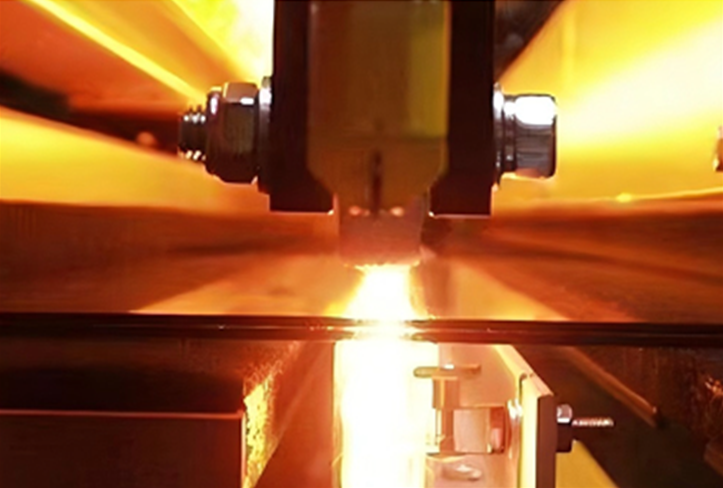
Most people just think about wattage. We think about where that energy actually goes. By tweaking the winding pitch or the diameter of the filament, we can bake “hot zones” and “cool zones” right into a single lamp. It’s a bit like painting with heat. Need a sharp spike of heat right in the center that fades out toward the edges? We just spec the winding to match that curve. It saves you from messing around with a dozen different controllers or building bulky shields just to get the temperature you need.
The Trade-offs (The “Real Talk” Part)
Now, here is the catch. Having the freedom to push voltage and wattage to the limit is great, but it isn’t free. When we cram a ton of heat into a tiny footprint to get those lightning-fast ramp-up times, the quartz tube takes a beating. It’s under a lot of stress. If your housing or your airflow isn’t up to the task, the tube is going to pop. It’s a balancing act.
Why This Matters in the Lab
For the engineers working on new glass composites, these lamps aren’t just components—they’re precision tools. You can basically mirror an industrial annealing process or a rapid quench cycle without the guesswork. Instead of just “soaking” a material in heat and hoping for the best, you know exactly how much energy is hitting the surface. It makes the whole process feel less like a gamble. Fewer failed runs, less wasted material, and a lot less time spent wondering why a sample cracked.